In generations gone past family memories were captured to motion pictures with regular 8mm, Super 8mm, and 16mm film. In later years sound film started to gain use. The means to view these family treasures have for the most part vanished from common availability. Consequently these films have in ... Read More »
Imaging Practices
Film Transfer to DVD Grain Consideration
We are presenting a continuing series to explain what effects, phenomenon, and peculiarities one should look for in evaluating the quality of a home movie film conversion and transfer to DVD. These considerations are applicable to regular 8mm, Super 8mm, as well as 16mm film conversion and ... Read More »
Screen Texture
We are presenting a continuing series to explain what effects, phenomenon, and peculiarities one should look for in evaluating the quality of a home movie film conversion and transfer to DVD. These considerations are applicable to regular 8mm, Super 8mm, as well as 16mm film conversion and ... Read More »
Daylight and Indoor Film distinctions
From the early nineteen thirties, 8mm and 16mm home movie film was available in a number of different types with alpha designations ranging from A through K. However, there were two fundamental choices the home movie film hobbyist had to deal with—Indoor or Outdoor film type. If the immediate ... Read More »
How Viewable are Dark Areas
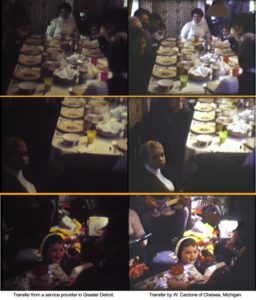
We are presenting a continuing series to explain what effects, phenomenon, and peculiarities one should look for in evaluating the quality of a home movie film conversion and transfer to DVD. These considerations are applicable to regular 8mm, Super 8mm, as well as 16mm film conversion and ... Read More »
Complimentary Color Correction
Home movies often have undesired attributes owing mostly to consumer production and to a lesser extent the limitations of consumer grade video camcorders. These camcorders are designed and manufactured for affordability with lots and lots of automation. In most cases the automation is a life saver ... Read More »
